From reverse osmosis systems to vacuum tubing, the technology used to produce maple syrup is…
A Milestone Taps Into A Feeling Of Gratitude
100,000 Trees Tapped
Given the overarching theme of Valentine’s Day, Tom Branon was exactly where he belonged on the afternoon of Feb. 14, 2026: in the Vermont sugarwoods he loves so deeply.
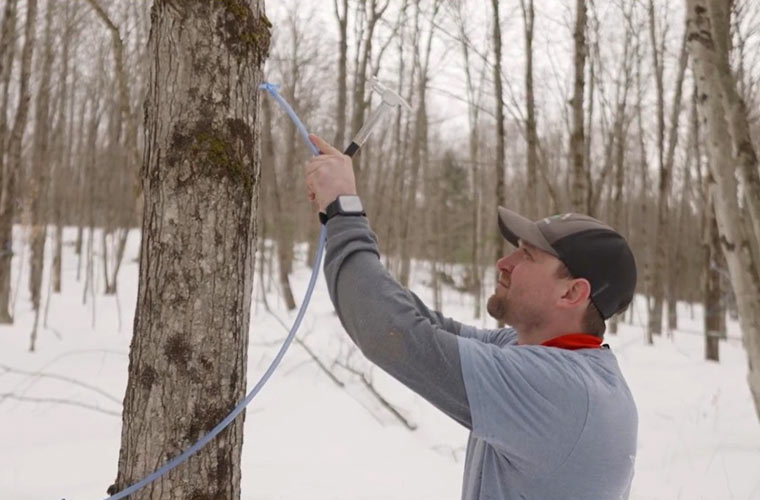
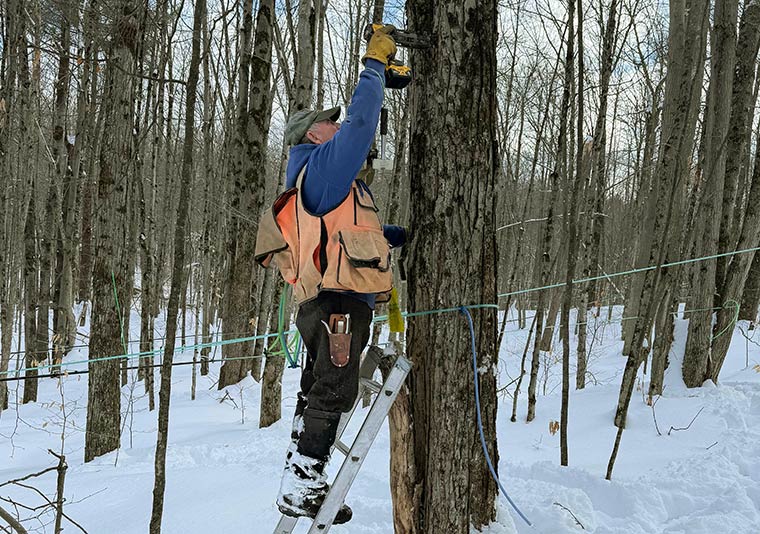
For Tom, the patriarch here at Branon Family Maple Orchards, this Valentine’s Day was especially memorable. As the late-winter sun started its daily descent in the west, Tom climbed atop a ladder, took the Dewalt Precision Tapper cordless drill hanging from a harness around his neck, and proceeded to drill a shallow hole into a maple tree.
“One hundred thousand!” he said, gently hammering the plastic spout into the tree. That was the moment, captured on camera, that the Branon operation reached a new threshold: 100,000 trees tapped for the upcoming maple season on land they call home. A few days later, Tom would tell a visitor to the sugarhouse that it was the fulfillment of a dream.
A Big Deal
While a number of other Vermont sugarmakers have hit or surpassed the 100,000 tap mark, it remains a pretty significant milestone. It’s certainly a number far above average.
Looking at 2025 maple crop data compiled by the U.S. Department of Agriculture, Vermont sugar makers put in a reported 8,350,000 taps last year. If we assume a conservative estimate of 3,000 sugarmakers in the state beyond hobby-level operations, then the average number of taps per sugarmaker would be around 2,800.
“I wonder what Tom’s dad would say if he knew we tapped 100,000 trees,” said Cecile Branon. “I don’t know how sugarmakers a generation ago could understand that number.”
Made Possible By Tech
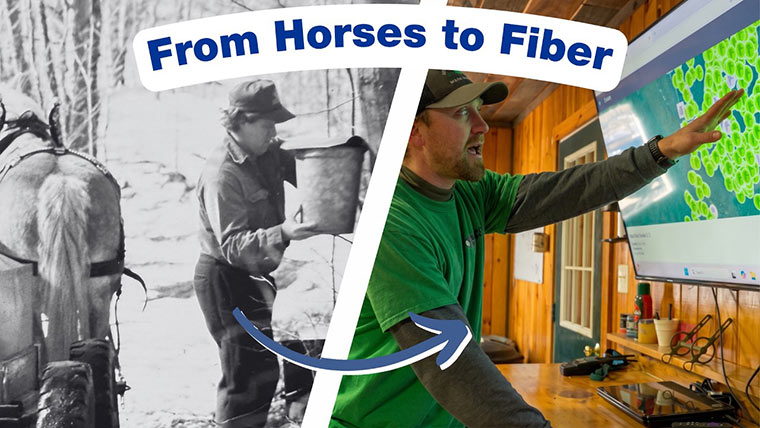
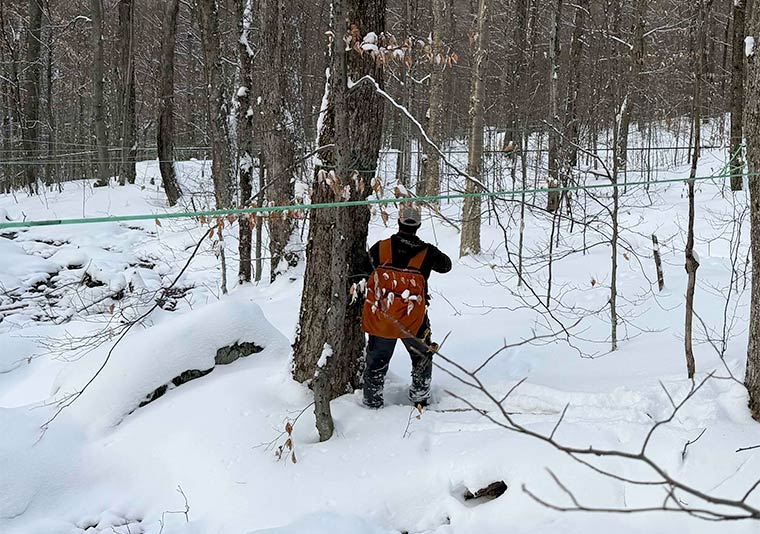
The use of plastic tubing is standard practice in a 21st-century sugarbush. While various inventors advanced the idea of tubing, it wasn’t until the late 1950s that supply companies began producing products resembling those in use today.
In 1973, according to Québec maple historian Réjean Bilodeau, the first vacuum system designed and marketed specifically for the maple industry – the Sysvac system – was introduced. By the early 1980s, large-scale maple operations had eschewed the standard tap-and-bucket and were operating at greater scale and efficiency with tubes and vacuum systems.
Don’t overlook the rise of cordless power drills and reliable snowmobiles and ATVs either. Now able to travel faster and lighter through the woods, tapping crews could expand their reach. Developments like the Precision Tapper (the brainchild of our own Evan Branon) allow maple trees to be tapped in an exact and consistent manner, helping maximize sap production, minimize invasiveness, promote tree health, reduce operator error, and enhance overall productivity.
Connecting To The Land
Anybody who has ever had a garden or farm, heated their home with wood, or hunted and fished knows the feeling of working in concert with Mother Nature. It’s about feeling appreciative while using the gifts the natural world offers.
For the Branon family, the 100,000th tap was cause for celebration. It stands as a testament to the ability to find harmony with the land. It’s not about extracting more or being bigger than other sugarmakers; it’s about finding that point of balance where hard work, ingenuity, and resilience bear their fruit.
Noted conservationist Aldo Leopold wrote that when we see land as a community to which we belong, we may begin to use it with love and respect.
Tom Branon, deep in the maple woods on Valentine’s Day, knew was using the land he owned with love and respect. He knew he belonged there.
Related Posts