A Sweet Partnership As the calendar turned to 2025 and we finished our end-of-year paperwork,…
It’s Boom Time for this Vermont Sugar-Making Business
After exiting dairy, the Branon family built one of Vermont’s largest maple sugar production and retailing operations.
Vermont’s maple industry has been booming and rapidly changing over the past few years. But few sugar-making operations have changed like the Branon Family Maple Orchards has since 2001.
Faced with changing to keep up with a shifting dairy industry, Tom and Cecile Branon sold their dairy herd that year. Then they sold feed and drove truck, along with sugaring on their 700-acre home farm at Fairfield, Vt. “Back then, no one was living off sugaring; it was just a diversification,” recalls Cecile. Not for long.
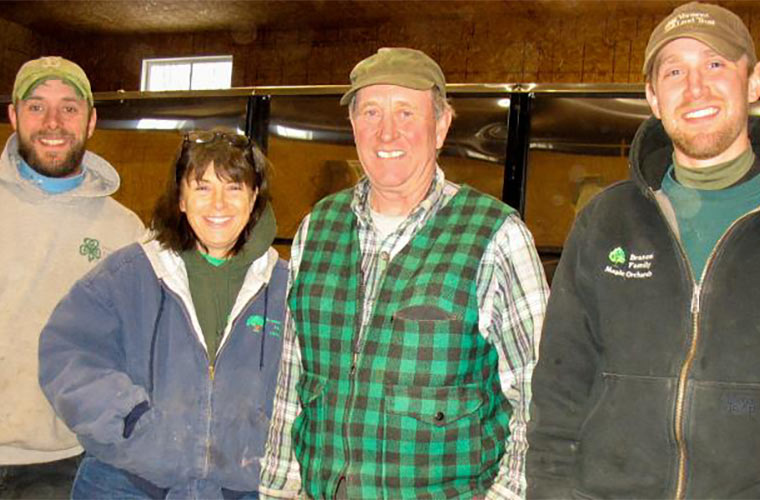
Today, the Branons and sons Kyle, Shane and Evan sugar full time. Their fourth son, Justin, also pitches in.
In 2013, they replaced their home farm’s sugarhouse with a 10,000-square-foot building housing two 6-by-16-foot evaporators and equipment, a kitchen, sales area and storage. They also added solar panels.
The Branons set up tubing systems and pump houses on 1,300 acres purchased in neighboring Bakersfield. Last year, they bought another 2,000-acre parcel in Bakersfield from the Vermont Land Trust and The Nature Conservancy. By July, the family was racing to build a new pump house, install three 8,000-gallon sap tanks and add 15,000 more taps on the new property — an investment of more than a $500,000.
Crazy Busy Sugaring Season
This winter, sap will be running from 78,000 taps. With taps up to 18 miles from the home farm, a half-dozen people walk the sap lines checking for animal damage, icing and downed trees on any given day. Two more are boiling sap. Several others are hauling sap tanks from gathering tanks and pump houses.
Each of three pump houses has a white board listing each tubing system and line by name and number. Cameras allow monitoring the reverse osmosis machines, storage tanks and vacuum systems at each pump house from the home farm.
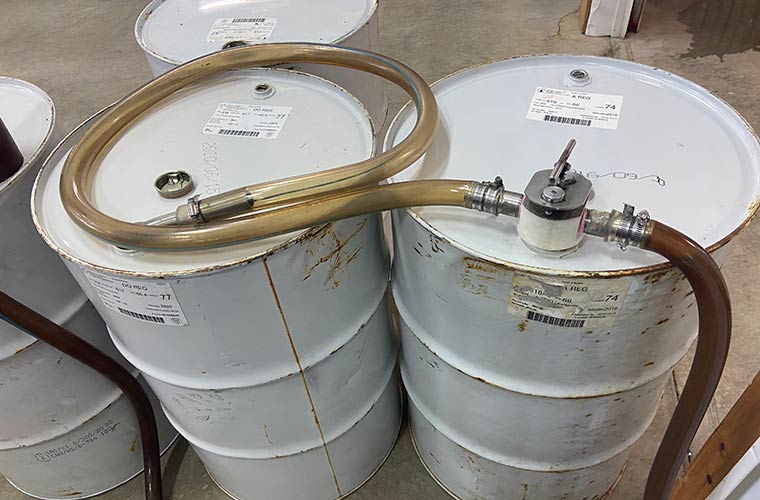
Via the ROs, sap is concentrated to 7% to 10% sugar. Then concentrate is trucked to the Fairfield sugarhouse and further concentrated before it’s boiled down in an evaporator.
About 80% of their core mainlines are buried, for good reason. As the climate warms, underground lines will keep sap cooler and extend the sugaring season.
Their new sugarbush adds one big advantage — higher altitude and colder temperatures. “The season in Bakersfield is 10 to15 days longer than Fairfield,” points out Cecile. “When you’re starting to make commercial grade in Fairfield, you’re still making table grade up there.”
The Branons take good care of their maple trees — only one tap per tree that must be at least 10 inches in diameter to be tapped. Each year, 10,000 taps are rotated out of production for a year to rest the trees, and give them time to clean and trim out undergrowth.
Back at the Sugarhouse
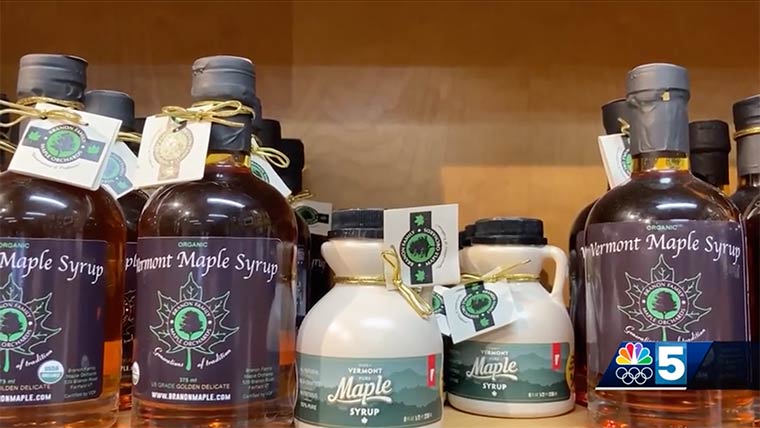
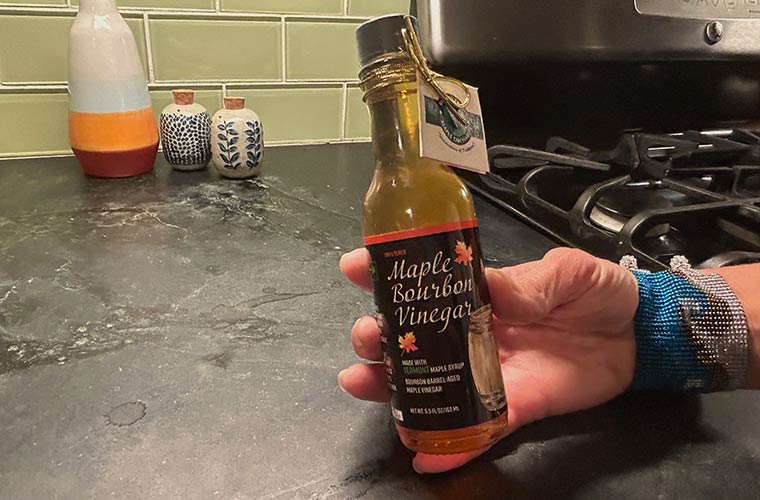
About 6,000 gallons of syrup a year goes into Cecile’s maple cream, barbecue sauce, vinegar, kettle corn and other products. The rest is sold in bulk.
Branon Family Maple Orchards is certified organic and kosher. Its sugarhouse was one of the first to be certified by the state of Vermont for good management practices.
“If you’re going to be a leader in the industry, you need to set an example and have a clean, quality facility and a good image,” emphasizes Tom Branon. “We need to step forward and show people that.
“We also need everyone to do the certification, and the entire maple industry will benefit.” With consumers attracted to maple’s health benefits, it’s perfectly placed to substitute for high-fructose corn syrup in the future, he contends.
“We love sugaring; it’s in our blood,” sums up Tom. “It’s not just the economics — it’s truly family, neighbors, and friends.”
Harlow writes from Westminster Station, Vt.
Sugar-Making, Sales Booming, Especially in Vermont
During springtime, there isn’t a truck in Franklin County, Vt., without a sap tank on the back, reports Cecile Branon. Even homeowners on 10-acre lots tap backyard trees and sell the sap to the nearest commercial-size sugar-maker. That’s just one indication of how the maple industry has exploded here.
Vermont is the largest U.S. maple producer, with about 42% of total production. The 2016 maple season was its biggest ever, producing an estimated 1.9 million gallons, adds Henry Marckres, chief of consumer protection for the Vermont Agency of Agriculture.
In the last 10 years, Vermont tap numbers have leaped from 1 million to 5 million, says the longtime maple expert. In 2016 alone, tap numbers jumped between 300,000 and 500,000.
It’s not only more taps that’s adding to production. “Years ago, we used to figure one quart [of syrup] per tap,” says Marckres. “Now, with all the new technology, smaller taps and high vacuum, most people today aren’t satisfied unless they get a half-gallon per tap.”
With Canada, the world’s largest maple producer, loosening quota for its producers, is there enough demand for all that maple syrup? “It’s amazed me,” he marvels. “It used to be there would be a sharp drop in price; the demand wouldn’t be there. But we just haven’t seen it. Demand has tripled, and we’re selling to all countries.”
Originally published on American Agriculturist.
Related Posts